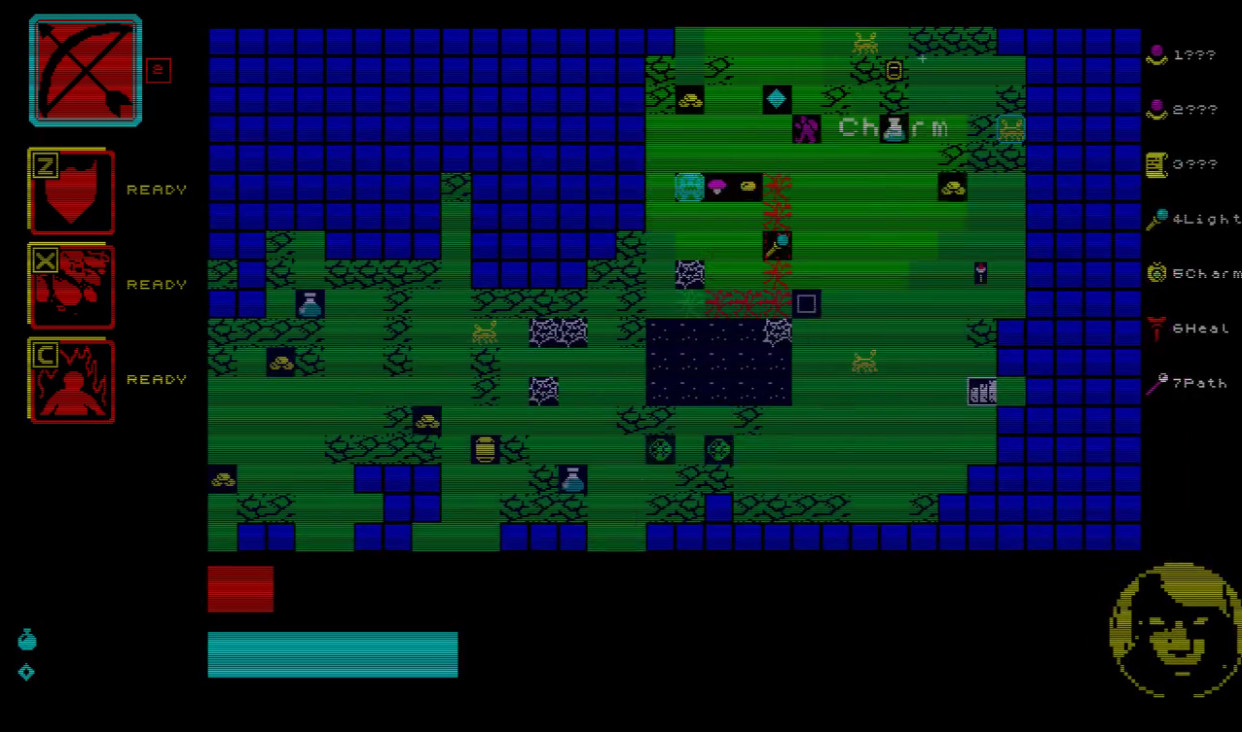
A couple of days ago (30th April) I released my ZX spectrum inspired roguelike on Steam and Itch.io. It has been an extremely busy couple of months but somehow I managed to finish the project in this timespan.
Some things went really well and others badly, but I’ve learnt a great deal from the intense experience. I’ve written up a bunch of my thoughts for you below.
You can check out the game the game on Steam and Itch.io.
What Went Wrong?
I don’t have any particular experience writing fantasy worlds, apart from a fair amount of Dungeons & Dragons I played as a teenager. Looking at other roguelikes I think I took narrative largely for granted. Now, when I play something like Spelunky, I see much more intentionality and effort to create a world and story for the player.
I thought that if I created an interesting world with enemies and traps, the narrative would naturally come from that.
A month or so before the end of development, I watched this talk by Jim Shepard about Tone and Humor in Dungeonmans. He talks about indie developers utilizing their own sense of humor to write funny, short text in your game. By writing what you know, and following your own strengths you can make interesting fantasy stories while avoiding cliches.
When Herald started development, the game was actually about dogs and had a weird funny sense of humor to everything being dog themed (all the enemies and NPC’s etc. where different types of dogs). I moved away from the dog theme in the first week because playtesting revealed no one knew what anything was, because everything was so weird. No one could work out how to play the game.

I missed the point though, and instead of replacing the theme with something as funny and interesting but easier to learn, I completely removed it and forgot. The theme was then auto-filled with more reasonably generic fantasy design.
A couple of fun elements remain, like playing as a rock princess, but these are few and far between. If I had the budget, I would remake the theme of the game right now!
Meaningful Stats and Effects
Choosing different classes and races, upgrades and leveling up. All these choices are interesting because the stat changes that you get as a player. However, in Herald there isn’t a whole lot of meaning from these stats. There are a couple of interesting ones, like additional arrows or additional freezing, that are good because they have more actual gameplay effect.
In the future I will work to make these player stats more meaningful, and provide additional information on what they do and how they work. (you can press TAB in game to view your stats at any time, but without any context this means very little to new players).
Dungeon Generation
This topic is huge and I think I’ll write a separate article about it in the future. For now though, there are two main changes that I want to make.
- I wish the levels had more flow to them. Right now you just move from left to right and explore each level. Looping hallways and lock and key rooms would be simple versions of how to make the levels more interesting.
- Open world. This is obviously a massive massive change, and something that would take months if not years of development. I do think though that Herald is an interesting base of a game and could easily be expanded. Open world with better flow and progression is one way I am interested in pushing both the gameplay and the narrative. If the game was open world I could include more options for character development past the character creator. I would also love to visit a reptile village in game that the lore talks about.
What Went Well?
Publishing the Game
I finished the game and published on both Steam and Itch.io. Making games is multi-disciplinary and there are numerous ways that game projects can fail and never see the light of day. I’m proud that I was able to finish and publish the game.
Marketing Plan
Before Herald of the Depths I had never made marketing plan of this scale and didn’t know what to expect. My marketing friend gave me a bunch of helpful advice but I didn’t have any expectations for the plan.
In the end, sharing my progress on social media and with people online was a very positive experience. Infact, it’s one of the core reasons I was able to stay motivated and excited throughout the project. It made solo development less isolating and was fun to talk to people about the game.
Sometimes writing update blogs was difficult, and felt as though time would be better off spent on the game, but as long as things are balanced, marketing effort is worth it.
Core Mechanic Design
Having a vision of the core gameplay and working to execute on that. At the start of development, I wrote that I wanted to design engaging, strategic core gameplay in a roguelike format. I had a lot of ideas how I could achieve this. Much of the theory came from Clockwork Game Design (a really excellent game design book), but I also tried to pull from the roguelike design community and my favourite part of other roguelikes.
All this worked out, partly by chance I’m sure, but through work and iteration by the third week on the game I had a solid core mechanic. I then spent the following weeks testing and playing around with this to see how it worked in different situations in the game.
I think having a solid vision for what you want the game to look like, even if that is partly a gameplay aesthetic, then you can be focused with the design. Cutting unnecessary things and testing + iterating on the ideas you think might work. Iteration here is key.
Smart System Planning
I am not the greatest programmer, and this effected many decisions I made on the project. However, I spent the time to plan out systems and design things in flexible ways after the prototyping stage. This saved time in the long run and made the hard part at the end a little easier.

Playtesting
Unfortunately, I never posted an online demo of the game, something I would if I could run the process again. However, I did do over 10 playtesting sessions, of various sizes, throughout. These sessions were really what made the game.
From feedback and observation I changed many features that didn’t work or were unlearnable. The ability system in the game was largely shaped by feedback, including having quicker cooldowns making them more fun to use.
The next game I make, and the future updates to Herald, will all use playtesting as much as possible.
Level Generation
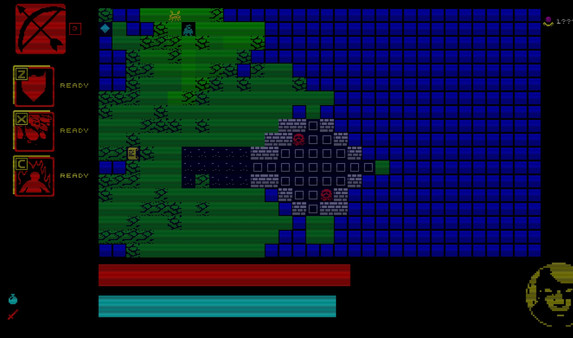
The level generation wasn’t perfect but practically works very well and allows for a good amount of content design as well as large possible permutations. I am particularly pleased with the way that the temples fit themselves into the levels. They feel so man-made and out of place but also like they were built there. Watching testers find a temple for the first time is always great to watch.
I want to add more things like the temples to Herald in the future as I think they make the experience quite unique. Interesting artifacts and places, that also contain game meaning (like the temples containing traps and upgrades), is a great thing for roguelikes.
Lack of USP
When developing the marketing plan, I thought the games unique art and theme would make it stand out in the roguelike market. This wasn’t wrong but I had overlooked the fact that the games development would be shared with the wider gaming community and therefore would need to standout in other ways too.
Games sell and appeal to customers via their projected aesthetic. This required careful crafting from the beginning of development and a lot of intention as a developer.
I had researched and planned the image of the game but I hadn’t spent enough time prototyping this style and seeing how it worked in demo videos etc.
Last Thoughts
All in all I am immensely happy to have released the game. I am frustrated by some of the bad decisions I made (like the tone and some of the level generation), but I can fix these in the future and learn from these mistakes!
I hope that this has been interesting for you and your own development! I also hope you enjoy Herald of the Depths if you do play it 🙂
Thank you for reading,
Jacy


 Herald of the Depths